
Check out the latest news on laws and regulations.
Insights
 Back
Back

Has Argentina Entered a New Era of Industrial Relations and Collective Bargaining?
For eight decades, Argentina has been a symbol of trade union strength and emphatic protection of worker rights. Since the first Perón presidency in 1946, Argentina has largely pursued an industrial policy of domestic manufacturing, which has been tied to industry-wide trade unions and collective bargaining agreements. A legal framework developed during this trend to strongly favor worker rights—both collective and individual—over managerial flexibility.
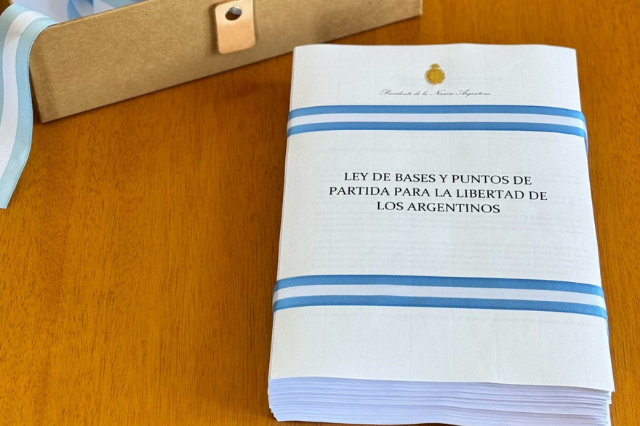
A lot of ink has been spilled recently about Argentina’s Labor Modernization Act (Law No. 27,802, as implemented by Executive Order No. 407/26, the “Act”). The Act represents the Milei Administration’s legislative effort to push back on decades of paternalistic judicial activism that presumes employment laws must first protect workers and unions. The Act tightens several loose threads inherited from the Employment Contract Act, most of which have been discussed here and here.
This article focuses on provisions of the Act that alter—and possibly transform—the legal relationship between the employer, the unions, and the rules of collective bargaining.
Union Dues and Limits on Contributions
First, let us follow the money. In Argentina, all collective bargaining agreements (“CBAs”) require the employer to withhold union dues (aportes) from a covered employee’s paycheck and to pay an additional amount to the union (contribuciones). Unlike other countries, union coverage is not voluntary. Instead, for most industries, an employee is automatically covered by a CBA by virtue of their employment. Likewise, most employers are not a direct party to a CBA, compelled instead to abide by a CBA negotiated between a business chamber (typically, the largest industry players) and the union.
Early versions of the Act proposed by the Milei Administration sought government oversight of union dues and an employee’s ability to opt in to the union as a condition to paying dues. The government fell short of this aspiration but, nonetheless, was able to limit union payments (aportes and contribuciones) by the employer and the employee to 2% of all financial obligations imposed under the CBA. In addition to dues, this includes extraordinary payments and contributions, training costs, and all other payments made under the CBA. While this change may appear technical, it has a significantly direct impact on a major funding source for the Argentine unions.
Proportional Representation
Before the Act, Argentina’s trade union framework was designed for an industrial economy characterized by large, centralized workforces, where broad, collective protection served an important role in promoting labor stability. While the economy pivoted away from manufacturing toward services, technology, and knowledge-based industries, however, the labor relations framework changed very little. Many proponents of change have argued that the existing model reinforced the political and financial influence of established unions at the expense of employer resilience and growing segments of a modern workforce left without representation. Within this framework, unions often maintained workplace representation structures that exceeded their actual dues-paying membership.
The Act pushes back on entrenched power, requiring that the number of trade union delegates be proportional to the number of dues-paying members.
Registration and Recognition
Before the Act, the legal framework imposed comparatively fewer procedural and disclosure requirements for unions seeking official recognition (personería gremial), strongly favoring incumbent unions. In practice, replacing an established union was exceptionally difficult, reinforcing a highly centralized model of representation with limited competition among labor organizations.
The Act changes this by more strictly regulating the process for a union to be recognized by the government. This enhanced process means the association seeking government recognition must file more documents to prove existence and representation, along with asset disclosures. The registrant must identify members by employer, place of business, job description, and industry sector. If a union seeks to replace another to represent employees, the Act requires the contending union to prove at least 5% more dues-paying members than the incumbent union.
These measures seek transparency as a means to confer greater integrity on industrial relations.
Paid Union Activity
Before the Act, Argentine legislation provided broad protections for union representatives without clearly defining the operational limits on the performance of union activities during working hours. As a result, disputes frequently arose regarding the limits of an employer’s guarantee of protected union activity.
The Act has introduced new regulations of the time dedicated to union activity that can be credited toward employment. Specifically, time spent on union activity during working hours:
- Must be “compatible” with the employer’s operational needs.
- Must not adversely affect operations of the employer’s critical sectors.
- Must be notified to the employer no less than 48 hours in advance.
- Cannot be accumulated or transferred between different employees serving as union representatives.
Practically speaking, expect these changes to be litigated in the courts to define terms such as “compatible” and “critical sectors” to assure the Act’s alignment with constitutional guarantees of freedom of association. For employers, however, the Act provides a clearer legal framework than before.
Amendments to the Protection of Union Candidates and Representatives
The Act confers protection on employees promoting union activity upon the union’s filing of a list of candidates with the competent government authority. In addition, when a trade union ceases to represent employees of a specific business, the former union delegates are automatically removed from office, although they will continue to benefit from other job security guarantees. The Act also enables the employer to seek a court order to temporarily suspend the protected status of union delegates upon a showing of risk to persons, assets, or the employer’s regular business activity.
Expedited Review of Collective Bargaining Agreements: Administrative Criteria
One of the Act’s potentially most significant changes is to hold expired CBAs as no longer operative.
It had become common practice for the courts and the parties to treat CBAs—negotiated decades earlier—as enforceable long after they had expired through automatic renewals and an inertia that postponed meaningful efforts to renegotiate. While this practice originally sought to protect employees from gaps in protections, it often led to rigid, outdated agreements ill-suited to modern industries.
The Act introduces criteria for the review of expired CBAs. CBAs can no longer be automatically renewed. If no expiry date is specified, the relevant government authority is told to use December 31, 2026 as a reference date to renegotiate. The Act mandates that the Secretariat of Labor quickly call parties to an expired CBA to renegotiate.
Conclusions
The Act represents the most significant regulatory change in collective bargaining and union representation in recent history. It is ambitious in its restructuring of union financing, the enhanced rules on qualifying for representation, and on limiting the power and immunity of union representatives. The Act, signals the Milei Administration’s broader effort to redefine the architecture of industrial relations in a transformed economy. Nonetheless, the Act will spawn litigation and debate among scholars, mostly focusing on guarantees of freedom of association and the constitutional limits of executive power.
Whether and to what extent the Act can prime collective bargaining in industries that have settled into a contractual inertia overlooked by the government and, to a certain extent, the business chambers, remain uncertain. Equally unclear is the Act’s long-term impact on collective bargaining in sectors operating historically under a strong trade union presence or whether a plurality of representative organizations is possible.
Ultimately, the Act is merely the opening chapter of a government’s attempt to reset collective bargaining and industrial relations. It will be years before we will have answers on its long-term efficacy. Nonetheless, the Act is more than a regulatory adjustment. It represents the clearest signal in decades that Argentina is willing to rethink the architecture of its labor relations and move toward a more modern and competitive framework for collective bargaining.
More information
If you would like to discuss this matter with the attorneys at Wiener Soto Caparros, please do not hesitate to contact our authors.



Disclaimer
This article is based on publicly available information and is for informational purposes only. It is not intended to provide legal advice or an exhaustive analysis of the issues it mentions.