

Check out the latest news on laws and regulations.
Insights
 Back
Back
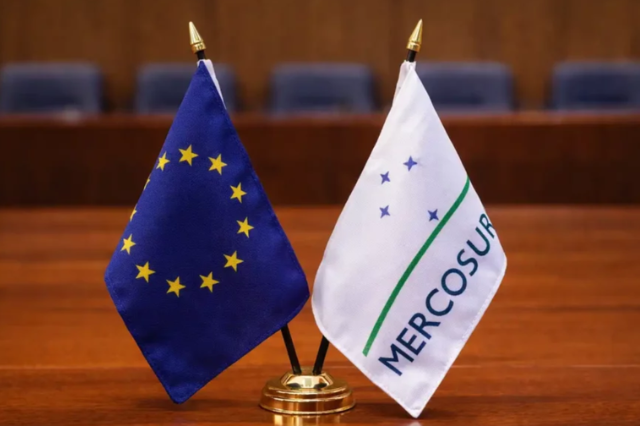
EU-Mercosur: New Obstacles and an Opening for Argentina
After more than 25 years of negotiations, the historic trade agreement between the European Union and Mercosur remains elusive. While leaders of both blocs recently met to sign the agreement, the final step—internal ratification—is proving more complex than expected in the EU. In the face of this uncertainty, Argentina is poised to approve the deal. Is there still a chance we might see the treaty come into effect in 2026?
Background
The European Union and Mercosur (Argentina, Brazil, Uruguay, and Paraguay) have been engaged in negotiations for a free trade agreement between the two blocs since 1995. The deal would create one of the largest free trade areas in the world, with a combined population of more than 700 million people and representing roughly a quarter of the world’s GDP. The agreement would lower tariffs on more than 90% of goods traded between the blocs and be phased in over a 10-to-15-year period. For more information, see our earlier article on the agreement here: Will Argentina Benefit from a Free Trade Agreement with the EU?
Negotiations concluded in late 2024, with the final deal splitting off the trade pillar into an interim agreement designed to go into effect first, as it would only require EU-level authorization. The remaining political dialogue, cooperation and trade commitments would come into force later, after securing the additional approvals necessary from each EU member state. Underlying the two-track strategy was the assumption by EU leaders that there was sufficient support for the trade deal at the EU-level. But they miscalculated.
Recent Developments
Earlier this month, after receiving the green light from the Council of the EU, representatives from both blocs met to finally sign the full treaty in Paraguay (both the interim and final agreement). This kicked off the final stage of the process: internal ratification. However, in the EU, this did not go as planned. Just days after the signing ceremony, the European Parliament voted to send the treaty to the Court of Justice of the European Union (CJEU), initiating a legal review expected to take at least a year or more. Now, the European Parliament is essentially in a holding pattern. It will not take up the treaty again until the CJEU issues its decision.
Europe’s move to put the trade deal on ice pending legal review from the bloc’s high court makes it unlikely for the deal to come into effect in the short run—but not impossible. EU leaders have signaled an openness to use another potential lever at their disposal: provisional application of the deal during the legal review. The catch is that the European Commission has been reticent to make any firm commitments until the agreement is approved by at least one Mercosur country.
What Does this Mean for Argentina?
Argentina’s Congress is close to approving the agreement, with the lower chamber having already signed off on the deal. This would open the door for provisional application of the agreement by the EU, but wouldn’t come without risks. At a minimum, if the deal is applied pending legal review, trade arrangements and investments based on the new rules may need to be adjusted based on any future EU high court ruling. And there’s also a significant concern that even with the future blessing from the CJEU, the EU may ultimately reject the agreement when it returns to the European Parliament and the Council of the European Union.
Argentina appears to already be hedging its bets, having recently signed a major bilateral trade and investment agreement with the United States. This agreement, which is likely to be considered by the Congress next month, in March 2026, contains significant commitments by Argentina to align its trade policy with United States. Approving both deals may work to Argentina’s benefit—the U.S. deal could come into force within months, putting pressure on EU leaders to opt for provisional application of the EU-Mercosur deal to avoid losing ground to the United States. This strategy isn’t foolproof, however, as the two agreements may subject Argentina to conflicting obligations, and Argentina is currently in hot water with the rest of the Mercosur bloc for going it alone with the United States.
Conclusion
This latest chapter in the EU-Mercosur saga adds yet another complication in the now quarter-century long negotiation of the historic trade deal. While the ultimate fate of the agreement remains uncertain, by approving the deal now Argentina has an opportunity to reaffirm its commitment to free trade and to potentially serve as the first testing ground for the treaty’s implementation.
If you are assessing how the EU-Mercosur agreement could affect your operations in Argentina, or you’d like to discuss Argentina’s current trade environment more generally, please feel free to get in touch with the article’s authors Charles Umbach-Bascone (pasantes@wsclegal.com) and Tom Standifer (tstandifer@wsclegal.com).
More information
If you would like to discuss this matter with the attorneys at Wiener Soto Caparros, please do not hesitate to contact our authors.



Disclaimer
This article is based on publicly available information and is for informational purposes only. It is not intended to provide legal advice or an exhaustive analysis of the issues it mentions.