

Check out the latest news on laws and regulations.
Insights
 Back
Back

Argentine Road Concession Program under Milei’s Administration
Through the largest highway concession in decades, the Milei Administration seeks to modernize Argentina’s infrastructure and attract private investment across more than 9,000 kilometers of Argentine roadways. Spanning fourteen provinces and including the country’s busiest traffic corridors, the program represents a key element of the current government’s privatization plan.
The Concession Process
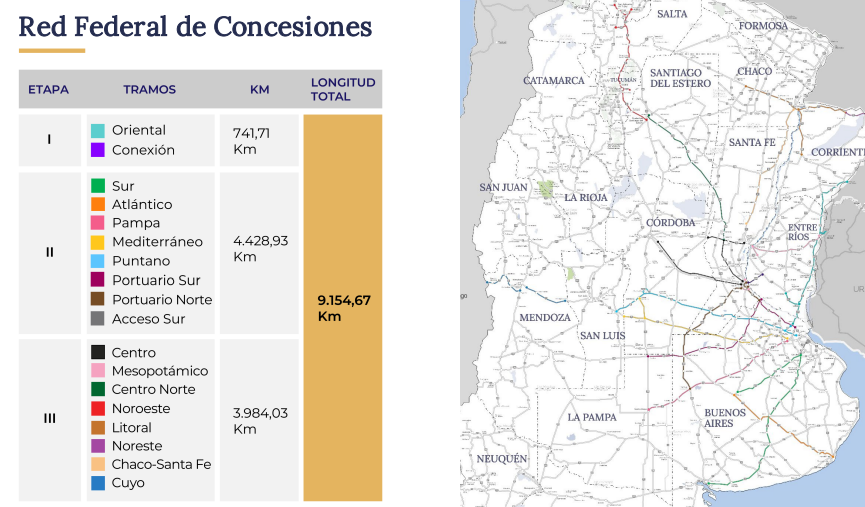
The administration has opened national and international bids to concession roughly 20% of Argentina’s roadways, covering some of the country’s most heavily trafficked routes. This Federal Concession Network (Red Federal de Concessiones) includes 9,154 km of national roads spanning across fourteen provinces—Buenos Aires, Chaco, Córdoba, Corrientes, Entre Ríos, Jujuy, La Pampa, Mendoza, Misiones, Salta, San Luis, Santa Fe, Santiago del Estero, and Tucumán. Under these concession contracts, private companies will assume the management of Argentine roads for terms ranging from 20 to 30 years.
This concession project was established by Decree 28/2025 and is regulated under the framework of the Public Works Concession Law (No. 17,520), as amended by the Bases Law (No. 27,742).
The road network will be concessioned in three stages. Stage I is already open, and investors can acquire the final bidding specifications and present offers through September 8, 2025. In addition, preliminary bidding materials for Stages II and III are already available, with formal solicitation for Stage II expected to begin shortly. While the Government has announced its intention to complete the bidding process and concession for each road segment by the end of 2025, some delays are expected given the scope of the project.
Who Can Participate and How?
The bidding process is open to Argentine companies as well as foreign entities, regardless of whether they maintain a registered branch in Argentina.
The process is divided into two stages. First, prospective bidders must be prequalified by the Argentine Concession Commission, which requires submission of documentation related to the bidder’s legal standing, technical capacity, financial solvency, and experience. Only prequalified bidders are then permitted to submit economic offers for evaluation by the Commission.
Key bid conditions include: the requirement that bidders incorporate an Argentine special purpose entity to enter into the concession contract, complete their own due diligence of the project, disclaim any claims or recourse against the granting authority, provide a financial guarantee to ensure completion of the project, and accept certain obligations for road maintenance/improvements and a staged implementation of electronic “free flow” tolling stations.
Protections and Benefits for Investors
The Argentine government is offering bidders certain risk protections, including an ability to engage in contract renegotiation in cases of economic volatility that impact the financial viability of the project (Art. 7 of the Public Works Concession Law No. 17,520). This renegotiation may include:
- Amendment of the Concession Term. The contract duration may be modified—either extended or shortened—as a tool for restoring the concession’s financial equilibrium.
- Tariff Adjustment. The tariff structure may be revised to preserve the economic-financial balance. This may include isolating a specific component of the tariff to directly address and offset cost imbalances.
- Rescheduling or Curtailment of Investment Obligations. Contractual investment milestones may be deferred, suspended, or canceled as needed to align with the financial realities of the concession.
- Direct Economic Compensation. Financial support may be provided through public sources, including the National Treasury, earmarked tax revenues, contributions for improvements, or other available funding mechanisms.
- Combination or Alternative Measures. A combination of the above tools, or other solutions consistent with the legal and economic structure of the concession, may be employed to restore balance.
Overview of Milei’s Privatization Effort
This initiative forms part of President Milei’s broader push to decrease the role of the state and liberalize the Argentine economy. Central to this agenda is the Law of Bases and Starting Points for the Freedom of the Argentine People (No. 27,742), enabling legislation that authorized the privatization—either fully or through long-term concession contracts—of eight major state-owned enterprises. This includes Corredores Viales S.A., which currently manages a large share of the Argentine road network.
In addition to Corredores Viales S.A., the list of companies slated for privatization includes Intercargo S.A.U., which provides ground handling services at airports; Energía Argentina S.A. (ENARSA), engaged in the exploration, production, and commercialization of hydrocarbons and energy; Nucleoeléctrica Argentina S.A., operator of the country’s nuclear power plants; and Yacimientos Carboníferos de Río Turbio (YCRT), responsible for coal mining in Santa Cruz. Also included are Agua y Saneamientos Argentinos S.A. (AySA), the provider of potable water and sanitation services in the Buenos Aires Metropolitan Area; Belgrano Cargas y Logística S.A., which operates freight rail services; and Sociedad Operadora Ferroviaria S.E. (SOFSE), which manages passenger trains. The goal is to reduce fiscal burden on the state, promote private investment, and increase efficiency in strategic sectors.
Conclusion
Remarks
This article provides a general overview of current opportunities related to Argentina’s road concession program and does not constitute legal advice. Companies interested in participating in the bidding process or seeking to better understand the applicable legal and regulatory framework are encouraged to contact WSC Legal for tailored guidance and support.
More information
If you would like to discuss this matter with the attorneys at Wiener Soto Caparros, please do not hesitate to contact our authors.



Disclaimer
This article is based on publicly available information and is for informational purposes only. It is not intended to provide legal advice or an exhaustive analysis of the issues it mentions.