

Check out the latest news on laws and regulations.
Insights
 Back
Back
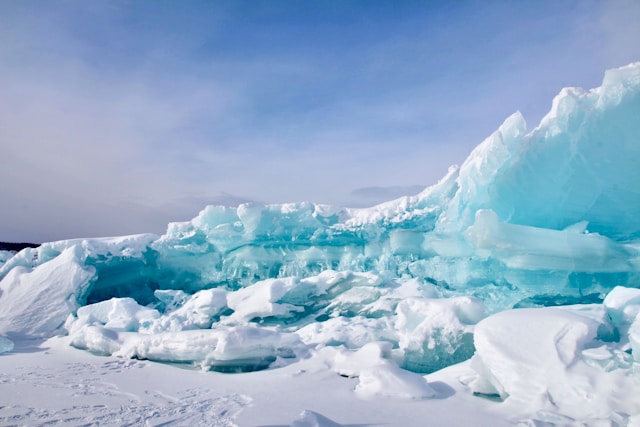
Argentina’s New Glacier Protection Law: Does It Portend Environmental Disaster?
Earlier last month, the Argentina Congress passed Law No. 27.804 to amend Argentina’s 2010 Glacier Protection Law.[1] The bill followed an extended legislative debate and a public hearing process. Backed by President Javier Milei and governors of mineral rich provinces, like San Juan, Mendoza, Catamarca, Jujuy and Salta,[2] the new law alters the standard of protection afforded glaciers and periglacial (adjacent to a glacier) areas and increases provincial authority over these natural resources. On April 24th, President Milei signed into law the Glacier Protection Reform Law (the “Reform”).
Before and After the Reform
Until the Reform, minimum environmental protection standards were set by the federal government as an exercise of the constitutional environmental mandate of Article 41 of the Argentine Constitution. These standards heavily restricted mining and other resource extraction activity on glaciers and periglacial areas. The federal government created a “National Glacier Inventory.”
The Reform changes prior law in two substantive ways:
- The Reform conditions protections. The National Glacier Inventory no longer assures prohibition of resource extraction activity. Only those glaciers and periglacial areas having a “demonstrable and strategic hydrological function” (i.e., strategic water reserves or sources for watershed recharge) qualify for protection.
- The Reform strengthens provincial authority. Provincial environmental authorities will have a more prominent role in assessing hydrological function and reviewing inventory classifications. While the federal government will remain responsible for the National Glacier Inventory, areas not meeting the hydrological function standard may be removed. The provincial government will, for the first time, be able to make those decisions based on technical studies. In addition, upon mere notice to the federal environmental agency charged with maintaining the National Glacier Inventory, the provincial government will be entitled to approve projects pending the protected area’s removal from the Inventory.
Before approving any projects within the protected areas, in addition to the environmental impact assessment, the province may also order “strategic environmental assessments” to further imbue the provincial governments with power and discretion over the protected areas.
What Is Behind the Reform?
As is evident from the above, the Reform endeavors to have the federal government share environmental assessment of the glaciers with the provinces in which these protected areas are located. Traditionally, the environmental protection framework has reserved to the federal government the power to set environmental protection minimums, imbuing the provinces with the power to regulate freely above that threshold. By empowering provincial authorities with the ability to remove areas from the Inventory and to permit extraction activity before that decision becomes final, the Reform swings away from a centralized, static framework that has withstood constitutional challenge.[3]
The Reform is already facing resistance. The governor of La Pampa (which does not have glaciers or any Inventory property) has characterized the Reform as a “weakening federal environmental standards affecting interjurisdictional water resources upon which downstream provinces depend.”[4] Environmental protection NGOs, like Fundación Ambiente y Recursos Naturales (FARN), Asociación Argentina de Abogados/as Ambientalistas (AAdeAA), and Greenpeace are reportedly exploring the possibility of filing judicial claims to challenge the Reform on constitutional grounds.[5]
Besides the jurisdictional issues, the Reform is part of Argentina’s current macroeconomic policy pursuit of foreign investment in mining. That investment translates to revenue and jobs for the province. At a time when the federal government has greatly reduced spending and provinces are scrambling for revenue, investment flows are more critical than ever.
Conclusion
While the short-term incentives of the Reform are evident, the long-term consequences of impact on water that transcends provincial borders is an equally apparent concern. Periglacial and glacial environments play a significant role in regulating freshwater availability in the arid and semi‑arid regions, contributing to downstream water flows. This is particularly important for irrigation-based agricultural areas, where agricultural productivity depends on the long-term reliability of water linked to glacial and snowmelt processes.
The Reform illustrates and embodies the Milei Administration policy to de-centralize management of natural resources and empower provincial discretion over environmental matters and the management of natural resources. Nonetheless, the Reform will prompt those provinces having protected areas to pursue economic interests over long-term nationwide benefit. It will also create uncertainty as to whether the hydrological function standard will be enough to withstand the economic interests of short-term economic interests.
Ultimately, the debate is about water. Glaciers and periglacial environments are large freshwater reserves fundamental to the conservation of a finite and essential natural resource. Will the Reform’s change of environmental standards and empowerment of local government threaten the country’s future? We can expect this question to be litigated in the courts.
Footnotes
[1] The new law amends Law No. 26.639. See https://www.boletinoficial.gob.ar/detalleAviso/primera/341109/20260424
[3] See Barrick Exploraciones Argentina S.A. et al. v. Federal Government, CSJN 140/2011 (2019) In a 72-page ruling, the Supreme Court upheld the Glacier Protection Law as constitutional after being challenged by mining companies and the Province of San Juan. The Supreme Court upheld the constitutionality of the Glacier Protection Law, highlighting Congress’s power to enact minimum environmental standards laws as “a constitutional mandate” under Article 41. The Court noted that the law’s protection required an “eco-centric” or “systemic” approach, rather than an “anthropocentric” one, obliging future litigants to consider not only private or state interests but those of the ecosystem as a whole.
[5] https://landing.infogreenpeace.org/accion-colectiva-por-lo-glaciares
More information
If you would like to discuss this matter with the attorneys at Wiener Soto Caparros, please do not hesitate to contact our authors.



Disclaimer
This article is based on publicly available information and is for informational purposes only. It is not intended to provide legal advice or an exhaustive analysis of the issues it mentions.