

Check out the latest news on laws and regulations.
Insights
 Back
Back
Breakdown of the Argentina-U.S. Trade Deal
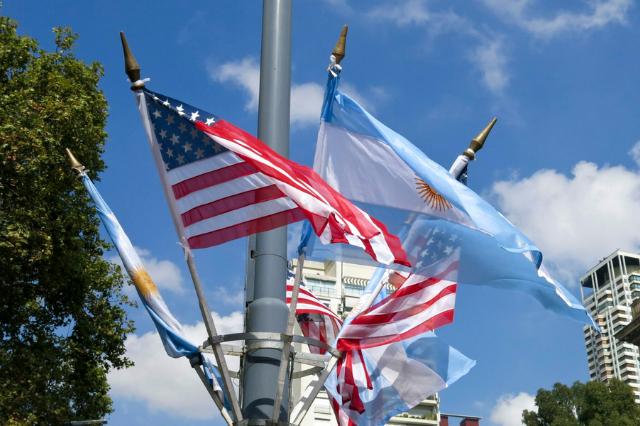
On February 5, 2026, Argentina and the United States signed a major trade and investment agreement, representing one of Argentina’s most significant bilateral trade deals in recent years. The Agreement, which now awaits Argentine Congressional approval, represents a substantial shift in Argentina’s trade policy toward closer economic integration with the United States. We examine the Agreement’s key provisions and potential challenges ahead.
This final Agreement follows the trade and investment framework announced in November 2025. Our analysis of that framework can be found here: Argentina-U.S. Trade Deal Announcement: Meaningful Change?
Tariff Reductions and Investments
Under the Agreement, Argentina will reduce or remove tariffs on 221 U.S. product categories, including motor vehicles, pharmaceuticals, and key agricultural products such as U.S. beef and cheese. In return, the U.S. will remove the 10% tariff imposed in April 2025 on 1,675 Argentine products, including critical minerals, pharmaceutical inputs, industrial materials, and machinery and equipment parts. The U.S. has also committed to increasing Argentine beef import quotas by 80,000 tons, though this was done through a separate executive order rather than the trade agreement itself and applies only to 2026 imports. The Agreement left in place the 50% tariffs that the United States currently imposes on Argentine steel and aluminum.
The countries have also made promises related to U.S. investment in Argentina. Specifically, Argentina has agreed to “allow and facilitate U.S. investment” related to critical minerals, energy resources, power generation, telecommunication, transportation, and infrastructure services “on terms no less favorable than it accords to its own investors in like circumstances.” For its part, the U.S. has committed to considering supporting investment financing in critical sectors in Argentina.
Argentina’s Regulatory and Policy Commitments
Beyond tariffs, the Agreement includes several regulatory and policy commitments by Argentina to facilitate trade between the two countries. The two most significant involve U.S. trade coordination obligations and changes to Argentina’s intellectual property regime.
Under the deal, Argentina has committed to adopt measures “with similar effect” when the U.S. takes trade actions for economic or national security reasons. This means that if the U.S. were to put in place retaliatory tariffs on a third country, Argentina may be obligated to do the same. Argentina has also promised to coordinate export controls and sanctions compliance with U.S. policies, work to prevent Argentine companies from backfilling U.S. export restrictions on third countries, and prohibit the purchase of nuclear reactors, fuel rods, or enriched uranium from certain countries (likely referring to Russia and China).
With respect to IP, the Agreement sets timelines for the country to ratify key international IP treaties, requires Argentina to adopt legislation tightening criminal penalties for counterfeiting and piracy, and requires it to repeal its 2012/2015 patentability guidelines that have constrained pharmaceutical and biotechnology patenting. The Agreement also limits the use of geographical indications to block U.S. exporters from using certain common cheese and meat terms.
A few of the other key commitments include:
- Accepting U.S. regulatory certifications without requiring additional local conformity testing;
- Limiting subsidies for state-owned enterprises and ensuring non-discriminatory treatment of U.S. goods and services;
- Prohibiting digital services taxes that discriminate against U.S. companies;
- Banning importation of goods produced with forced or compulsory labor;
- Adopting the WTO Agreement on Fisheries Subsidies;
- Eliminating consular import requirements and import licensing for U.S. goods;
- Implementing a three-year phase-out of Argentina’s 3% statistical tax; and
- Establishing paperless trade and pre-arrival processing systems.
Next Steps and Potential Pitfalls
President Milei has announced that the Agreement will be submitted to the Argentine Congress for approval in March 2026. While the deal can take effect on the U.S. side without further approvals, Argentine legislative ratification is required. We see good chances for passage, given President Milei’s increased support in the legislature following the October 2025 elections.
Nevertheless, a key issue that Argentine legislators will need to contend with is how the Agreement interacts with Argentina’s membership in the Mercosur customs union. Mercosur generally requires members to negotiate trade deals as a bloc and maintain a Common External Tariff on all imports. Argentina has argued that the U.S. deal falls within current exemption allowances, but Brazil disagrees, claiming that the deal appears to cover more products than are currently authorized. Brazil has left open the possibility of contesting the Agreement on this basis.
A related issue is how the U.S. deal squares with the recently signed EU-Mercosur free trade agreement, which was recently approved by the Argentine House of Deputies and will likely receive final signoff from the Senate soon. While the EU deal is currently being assessed by the EU high court, European leaders have expressed openness to provisionally apply the treaty during the legal review to member states that approve the agreement. The challenge here will be to ensure that these two treaties don’t create conflicting obligations for Argentina.
Conclusion
Argentina’s entry into this Agreement represents a major shift away from earlier protectionist trade policies and towards further integration with the United States. For the U.S., the deal will open up a significant new customer base and provide favorable conditions for businesses to expand their footprint in the country. On the Argentine side, the deal is also likely to have benefits, particularly for cattle producers and the energy sector.
The agreement also poses challenges for Argentina. The country’s pharmaceutical industry and other local manufacturers are likely to face greater competition from American imports. And Argentina’s additional commitments in the Agreement, and its decision to negotiate bilaterally despite its membership in Mercosur, raise questions about the impact to other trading relationships—in particular with the European Union. Nevertheless, Argentina is betting that despite these concerns, a closer relationship with the U.S. will pay off in the long run. Only time will tell.
More information
If you would like to discuss this matter with the attorneys at Wiener Soto Caparros, please do not hesitate to contact our authors.




Disclaimer
This article is based on publicly available information and is for informational purposes only. It is not intended to provide legal advice or an exhaustive analysis of the issues it mentions.