

Check out the latest news on laws and regulations.
Insights
 Back
Back
Did the Labor Courts Neutralize Milei Administration Reforms?
The Milei administrations recent electoral success is leaving many to predict a major reform in Argentina’s labor laws. But whether ruling by decree or achieving legislative support, President Milei’s ambitions must still confront the resistance of the Argentine labor courts. It will not be the first time.
Background: The Ley de Bases and Its Objectives
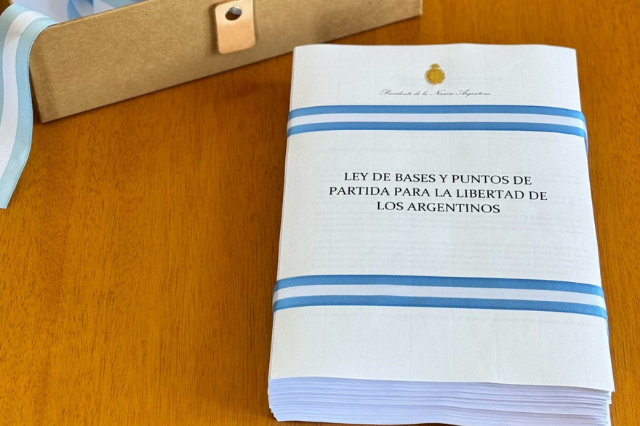
In July 2024, the Argentine Congress passed the so-called Ley de Bases, President Milei’s omnibus reform package aimed at deregulation and modernization of the State. Key among these reforms was the elimination of several penalties payable by employers for failing to properly register employment, to pay statutory severance, or to deliver timely post-termination employment certificates.
These penalties were legislated decades ago to deter unlawful employment practices and to ensure employee access to health insurance, workers’ compensation, and retirement pensions accrued only by payrolled employees. Nonetheless, over time the labor courts applied these penalties to facts beyond congress’s original intent. Instead of assuring basic employment rights, the courts levied the penalties to non-payrolled fringe benefits (e.g., private health insurance, cell phone allowances, company cars, and car allowances) even if wages and recurring bonuses were properly payrolled and the employee assured insurance and retirement benefits.
Why Penalties Encouraged Litigation?
Because the penalties were payable to the employee (and not to the government), they further distorted the presumed legislative goal by encouraging employee-side attorneys to search for any unreported fringe benefits, especially for highly compensated executives whose claims represented a potential windfall. These factors increased termination costs, incentivized litigation, and often discouraged the employer from offering fringe benefits.
By eliminating them, the Ley de Bases sought to soften the financial cost to employers and reduce their exposure as part of an overall effort to discourage claims brought by properly registered employees.
Critics of the reform argued the elimination of penalties, as opposed to maintaining them but for the government’s—not the employee’s—benefit, completely undermined the means to hold employers accountable for their employment registration obligations. The criticism has not gone unnoticed in the Argentine labor courts. Recent rulings show that, despite the legislative repeal of the penalties, these courts continue to award like amounts to plaintiffs by denominating them as “damages” instead of “penalties.”
Penalties under the Legacy Regime
The Ley de Bases eliminated three statutory penalties. Let us take a quick look at these:
- Penalty for Improper Registration. This penalty applied to any unreported or under-reported employment relationship. The penalty amount varied depending on the facts. If the employee brought a claim during employment, the penalty entitled the employee to double statutory severance and 25% of any unreported compensation. If the employee filed a claim after employment, only the doubling of severance for seniority would apply.
- Penalty for Failure to Pay Full Statutory Severance. This penalizes an employer for forcing an employee to sue for a statutory entitlement (severance upon termination). The penalty equals 50% of the statutory severance payable.
- Penalty for Failure to Timely Deliver Employment Certificates. This punishes the employer who, for whatever reason, fails to deliver the statutory certificates required by law within 30 days of the end of employment. This was a particularly pernicious penalty given its magnitude (three times the employee’s recurring monthly compensation) for what was often an administrative oversight by the employer.
To illustrate the impact of these penalties (and why they encouraged litigation), let us look at a hypothetical that assumes:
- The termination of an employee earning a monthly salary of US$10,000 with six years of seniority;
- The termination is deemed to occur mid-month due to the employee’s claim of constructive dismissal brought during employment; and
- The employer failed to payroll a US$100 cell phone allowance during those six years.
In this hypothetical, statutory severance payable upon termination would be just over US$87,000. Applying the penalties, we would add to this severance: US$86,800 (Penalty 1) plus US$42,500 (Penalty 2) plus US$30,000 (Penalty 3). This means US$159,300 in penalties on top of the US$87,000 payable as statutory severance [1].
The Ley de Bases and Repeal of the Penalties
As mentioned above, the Ley de Bases abolished the three penalties described in the preceding section. Since then, however, the labor courts have trended toward awarding damages to supplant the statutory penalties. This has led to uncertainty about the judiciary’s adherence to the legislative will and, if so, whether the repeal of the penalties applies to all claims adjudicated after July 2024 (regardless of the termination date) or only to those terminations that occurred after July 2024.
Certain provincial courts have adopted the adjudication standard, denying penalties for all claims reviewed after July 2024 even if the termination date precedes the change in law. The prevailing view, including for the labor courts sitting in the City of Buenos Aires, is to apply the change only to those claims involving a termination occurring after the change in law [2]. Perhaps more troubling is the willingness of the labor courts to enable an employee to sue for damages even if the repeal of the penalties is found constitutional. In one case [3], the judge found the employer’s failure to register the employment and to pay severance upon termination caused “self-evident harm” to the employee, entitling them to damages. That employee had almost eight years of service and, not coincidentally, the court awarded damages equal to sixteen monthly wages, i.e., a doubling of severance for seniority.
Particularly irksome about the damage award substitute for penalties is the court’s apparent indifference to the legal premise that damages—particularly those based in tort—must be proved. The labor court’s finding of damages without proof of the actual harm suffered by plaintiff is legally unsound and an obvious effort to call a legacy penalty by a different name.
Conclusions
While it appears largely settled that the Ley de Bases has eliminated the penalties for unreported or under-reported employment and other employment law violations by the employer, certain labor courts are looking to maintain the legacy statutes by using them as measures for damages. At least for now, the employer’s exposure has not gone away, it has simply morphed into a different form. In Argentina, where its Civil Law system relies on statutes to provide legal certainty, the discretionary award of damages will lead to increasingly disparate outcomes. Pending a pronouncement of the Supreme Court to unify criteria, the Argentine labor courts’ awarding of non-statutory damages will neutralize intended legislative reform and may harbinger future conflict between these courts and the sweeping reforms promised by Javier Milei. If so, this will perhaps engender even greater uncertainty for employees and employers attempting to assess probable outcomes of their disputes.
Footnotes
[1] The hypothetical is an over-simplification to offer an illustration and ignores several variables, including a possible cap on severance under the so-called Vizzoti Rule.
[2] Another ruling by a labor court in the City of Buenos Aires upheld the repeal of the penalties as constitutional and applied the adjudication standard. See “Vasold, Vanesa Soledad v. MPV Construcciones S.R.L. et al. (wrongful discharge).”
Other labor courts —including those sitting in Córdoba, Tucumán, and Mendoza— have reached similar conclusions, both for terminations that occurred before and after the effective date of the reform. These courts have consistently confirmed the constitutionality of the Ley de Bases and ruled that the abrogation of the penalties for unregistered employment or failure to pay for severance does not violate the Constitution. However, they also held that employers remain liable for damages when their conduct causes harm and therefore ordered compensatory damages resulting from unregistered employment or failing to pay severance.
[3] “Vasold, Vanesa Soledad v. MPV Construcciones S.R.L. et al. (wrongful discharge)”.
More information
If you would like to discuss this matter with the attorneys at Wiener Soto Caparros, please do not hesitate to contact our authors jmcedolini@wsclegal.com and analvanti@wsclegal.com.



Disclaimer
This article is based on publicly available information and is for informational purposes only. It is not intended to provide legal advice or an exhaustive analysis of the issues it mentions.